Summary:A short incoming inspection confirms diameter, roundness, density, and surface condition match drawing before balls enter production. Catching defects early avoids field failures.
Quick Answer
Inspect incoming PTFE balls for diameter, roundness, specific gravity, surface finish, and visible voids before assembly. A five-minute incoming check catches most supplier or transit defects before they reach your valve line.
1. Dimensional Verification
Measure nominal diameter with a calibrated micrometer or optical comparator at multiple orientations. Compare to drawing tolerance — typically ±0.05 mm on small balls to ±0.25 mm on large diameters.
- Sample at least 3 balls per batch for OEM lots; 100% for critical pharma or semiconductor programs
- Record measured values against batch ID on your incoming inspection report
- Reject lots with any sample outside tolerance band unless engineering approves concession
2. Roundness and Surface Finish
Roll the ball on a flat granite plate — wobble indicates out-of-round grinding or impact damage in transit. Visual inspection under diffuse light reveals scratches, flat spots, or tooling marks that can score soft seats.
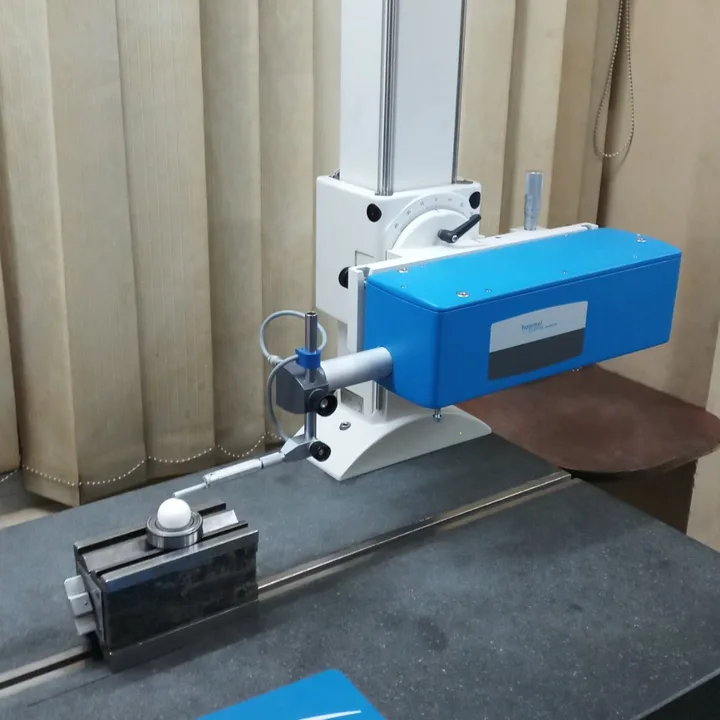
For high-value assemblies, a V-block and dial indicator gives quantitative roundness variation. Accept only within your seat clearance specification.
3. Density (Specific Gravity) Check
Virgin PTFE specific gravity should fall in the 2.14–2.20 g/cm³ range. Significantly lower values suggest porosity, reprocessed content, or incorrect filler loading.
Weigh the ball and calculate volume from measured diameter, or use a hydrostatic balance for direct density. Cross-check against the supplier MTC.
4. Visual Void and Contamination Screening
Hold the ball to strong light and look for cloudiness, pinholes, or colour streaks indicating mixed scrap. Contamination from mold release or foreign particles can cause leak paths in sanitary systems.
5. Documentation and Batch Traceability
Confirm the shipment includes Material Test Certificate, inspection report, and batch ID matching your PO. For export programs, verify FDA statement or certificate of origin as required.
When evaluating a new supplier, use our manufacturer evaluation guide and RFQ checklist to set documentation expectations upfront.
Related Guides
PTFE Ball Inspection — FAQ
What diameter tolerance should I verify on incoming PTFE balls?
Check against your drawing or PO tolerance — typically ±0.05 mm to ±0.25 mm depending on nominal size. Use a calibrated micrometer or optical comparator.
What roundness check is practical in the field?
Roll the ball on a flat surface or use a V-block and dial indicator. Variation beyond your seat clearance indicates out-of-round grinding or impact damage.
How do I check for voids without destroying the ball?
Visual inspection under good light for pinholes or cloudiness, plus specific gravity measurement (virgin PTFE ~2.14–2.20 g/cm³). Low density suggests porosity or filler inconsistency.
Should I document inspection results for OEM batches?
Yes. Record batch ID, sample size, measured diameter, roundness, and pass/fail. Request MTC from the supplier — see our manufacturer evaluation guide for documentation expectations.
Request a PTFE Ball Quote
Tell us the ball diameter (5 mm to 310 mm), material grade, quantity, and application. In-house PTFE ball manufacturer & OEM — Dahegam, Gandhinagar, Gujarat, India.
- Response within 24 hours on business days
- MOQ flexible — samples and OEM volumes
- Engineering drawings accepted
- Export supply worldwide
- Metric and inch sizes from 5 mm to 310 mm
224/1, Nr. Precision Autowares, Nr. IOCL Petrol Pump, Zak-Vahelal Road, Dahegam
Gandhinagar, Gujarat 382305
India